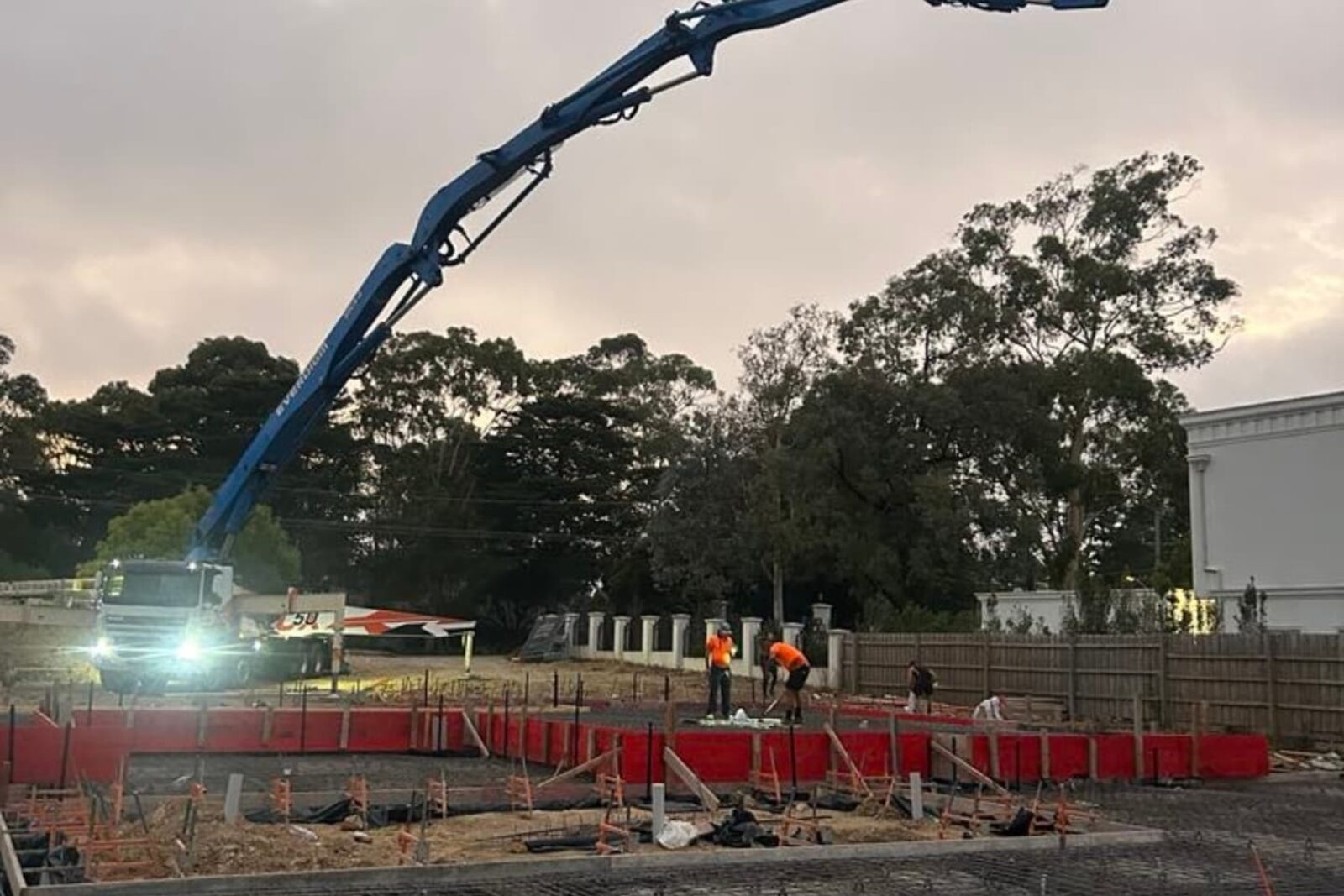
Boom pump placing structural-strength concrete into a reinforced slab

The short version

  • MPa is concrete's compressive strength — higher MPa means stronger concrete and a higher price.
  • 20 MPa suits paths and non-structural work; 25 MPa is a common house-slab and driveway mix; 32 MPa is for heavier structural and commercial slabs.
  • Always pour to your engineering or council spec — going stronger than needed just costs more.

Ordering concrete and stuck on which strength to ask for? “MPa” is the number that decides it — and it changes both how your concrete performs and what it costs. Here's what 20, 25 and 32 MPa actually mean, which one suits your job, and how much the step-ups add.

What MPa means

MPa (megapascals) is the compressive strength concrete reaches once cured — how much load it can carry before it fails. A 25 MPa mix is stronger than 20 MPa; 32 MPa is stronger again. Strength comes mainly from the cement content and mix design, so a higher-MPa mix uses more of the expensive ingredient — which is why it costs more per cubic metre.

Which mix for which job

20 MPa — light-duty, non-structural work: garden paths, some footpaths and fill. The budget option where strength isn't critical.

25 MPa — the workhorse residential mix. Most house slabs, driveways and shed slabs are poured at 25 MPa (or as specified). Good strength, sensible price.

32 MPa — heavier structural and commercial slabs, suspended slabs and anything carrying serious load. Costs more, but it's what the engineering calls for on those jobs.

The golden rule: pour to the strength your plans, engineer or council require. Under-spec and you risk the slab; over-spec and you're just paying more for concrete you didn't need.

What the step-ups cost

Each jump in strength adds to the per-cubic-metre rate — modestly from 20 to 25, a little more again to 32. On a small slab the difference is minor; on a big pour it adds up, which is exactly why you don't want to over-order strength “to be safe”. For how the base rate is set, see our guides to concrete price per m³ in Melbourne and concrete cost per m³ in Australia.

Not sure which mix your slab needs? Tell us the job — we've poured all three for 15 years and can point you right. We can supply the right mix, deliver it and pump it. Get a quote →

Work out how much you need

Once you've settled the strength, size the pour with our concrete calculator so you order the right volume at the right MPa — the two decisions that set your bill.

CGI Concrete Pump Melbourne
Written by CJ Iordanou
Co-owner & pump operator, CGI Concrete Pump Melbourne

CJ is one of the two brothers behind CGI Concrete Pump Melbourne. He's spent 15 years in concrete — on the tools laying it and now running the pumps — so these guides come from real Melbourne job sites, not a textbook.

Connect with CJ Iordanou on LinkedIn
Published 31 July 2026
Understanding Concrete Strength (MPa Explained)
FAQ

Quick answers

What does MPa mean in concrete?
MPa (megapascals) is the compressive strength of the concrete after it cures — how much load it can take. A 25 MPa mix is stronger than 20 MPa, and 32 MPa stronger again. Your engineer or the job type dictates the minimum strength; going stronger than specified just costs more without adding value.
Is 20, 25 or 32 MPa right for my slab?
As a rough guide, 20 MPa suits paths and non-structural work, 25 MPa is a common house-slab and driveway mix, and 32 MPa is used for heavier structural and commercial slabs. Always follow your engineering specs — if in doubt, ask us or your concreter before you order.
Concrete pump hire FAQ

More questions about concrete pumping

Which parts of Melbourne and Victoria do you cover?
We hire concrete pumps right across metropolitan Melbourne and out into regional Victoria — including the Mornington Peninsula, Geelong, the Yarra Valley and the outer growth corridors. If you're not sure we reach your site, call us on 0412 845 415.
Can you supply the concrete as well as the pump?
Yes. We can arrange ready-mix supply and delivery alongside the pump so you deal with one team for the whole pour. See our concrete delivery page or ask for a combined quote.
How far ahead should I book a concrete pump?
For most residential jobs a few days' notice secures your preferred date; busy periods and larger commercial pours book out further ahead. The sooner you lock in the date the better — get in touch to check availability.
Do I need a line pump or a boom pump?
It depends on access and pour height. Line pumps suit tight residential sites and ground-level work; boom pumps reach over buildings and into hard-to-access areas. Our line pump vs boom pump guide breaks it down, or we can advise on a quick call.
What should I have ready on site before the pour?
Clear access for the truck, a water source for washout, formwork set and signed off, and enough crew to place and finish. We'll walk you through site setup when you book — see our hire rates for what's included.

Fast quotes · Melbourne & Victoria wide

Book a concrete pump that turns up on time

Tell us the site, the pour and the date. We'll come back with a straight price and a clean, reliable pump crew — line pump or boom, resi or commercial.

📍 Based Kilsyth South VIC — serving all of Melbourne & Victoria
✉
GET A QUOTE — 30 SECONDS