By CJ Iordanou · 31 Jul 2026
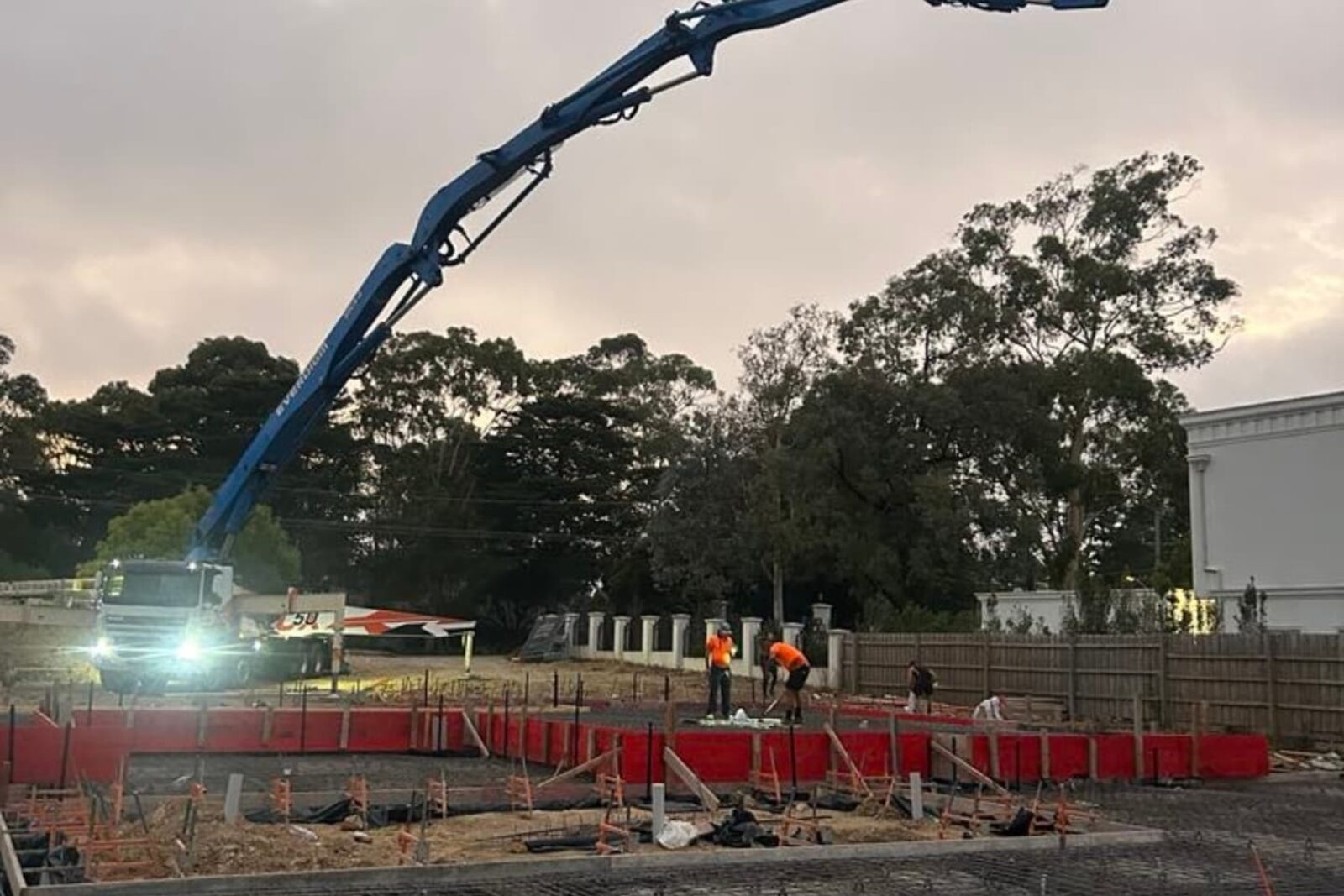
The short version
- Safe pours start with proper setup on stable ground and a clear plan.
- Keep people out of exclusion zones — around the pump and, for booms, under and around the boom.
- Controlled line handling and clear communication prevent most incidents.
- Ticketed, experienced operators make the difference.
Concrete pumping moves a lot of heavy material under pressure, so it's work that's done safely by planning, not luck. Whether it's a backyard line pump or a boom on a commercial slab, the same principles keep everyone on site out of harm's way. Here's what good pumping safety looks like — and what your crew should know before the pump arrives.
Setup: get the base right
A pump has to be set up on stable, level ground, clear of the pour and of overhead hazards — power lines especially. Boom pumps deploy outriggers that need firm ground and packing so the machine stays planted. Rushed or poor setup is where a lot of risk comes from, so this step is never hurried.
Exclusion zones
An exclusion zone is the area kept clear of people while the pump is working. Around a line pump, that means keeping clear of the hose end and any whip if a line blocks and clears. Around a boom, it means staying out from under and around the boom and its reach. Everyone on site should know where these zones are and stay out of them unless they're part of placing the concrete.
Line and hose handling
The end hose is handled by the crew placing concrete, under control at all times. Blockages are managed carefully — a blocked line under pressure is a known hazard, which is why it's cleared by the operator following the right procedure, not by anyone having a go. Good communication between the operator and the hose crew keeps the flow controlled and predictable.
What your site crew should know
- Where to stand — and where not to — before the pour starts.
- To keep clear of the boom, outriggers and hose end.
- To let the operator manage any blockage or breakdown.
- To watch for overhead power lines around a boom.
Want a pump crew that runs a tight, safe pour? Our operators are ticketed, experienced and turn up ready to work in with your team. See our pump hire or get a quote →
Safety and a smooth pour go together
The same habits that keep a pour safe — good setup, clear roles, controlled placement — are what keep it fast and clean too. That's why we treat it as one thing. When you're planning your job, decide on the right pump first (line vs boom) and size the pour with the calculator.
