By CJ Iordanou · 31 Jul 2026
The short version
- Get the prep right — set-out, base, formwork and steel — before any concrete is ordered.
- Order the correct volume and strength, and line up enough hands (and a pump) for the pour.
- The pour is time-critical: place, screed, float, edge, then cure.
Pouring a concrete slab isn't complicated, but it is unforgiving — once the truck arrives, the clock's running and concrete waits for no one. The jobs that go smoothly are the ones where the prep was done properly and everyone knew their role. Here's the process the way we run it on Melbourne sites.
1. Set out and prepare the base
Mark out the slab, excavate to depth and get the ground compacted and level. Add and compact your fill, then set the base so the finished slab lands at the right height with the right fall for drainage. Good base prep is what stops a slab cracking or ponding later.
2. Formwork and steel
Set your formwork to the slab's shape and height, braced so it won't move under the weight of wet concrete. Lay reinforcing mesh or bar on chairs so it sits in the correct part of the slab — see our guide to steel mesh size. Add a vapour barrier where required.
3. Order the concrete
Work out the volume with our concrete calculator and order the right mix strength for the job. Book delivery — and a pump if the truck can't reach the slab, which for most backyards it can't.
4. The pour
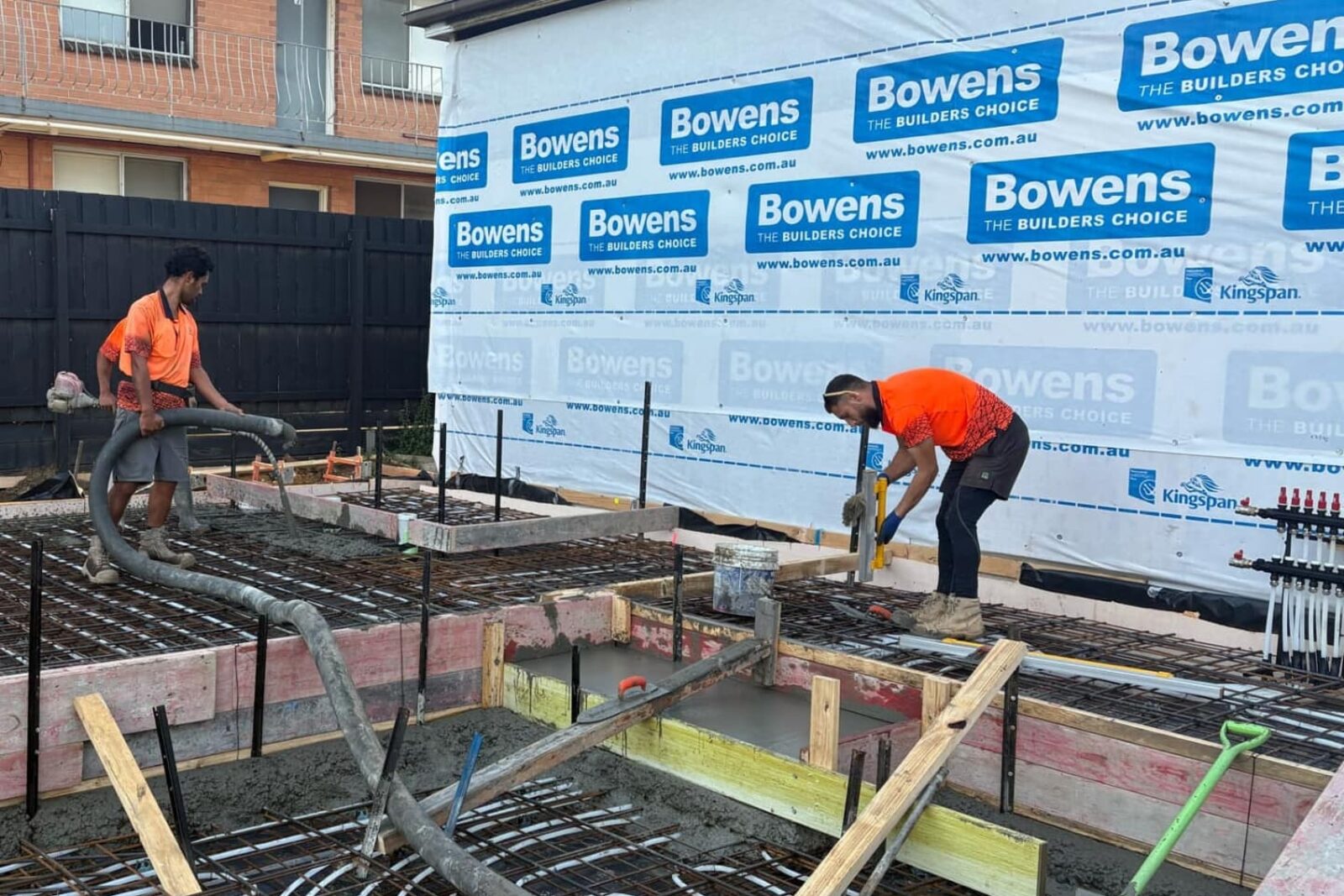
This is the pressure moment. Place the concrete evenly, screed it off to level, then bull-float to bring up the surface. Once the bleed water's gone, edge and finish (broom, trowel or however the job calls for). Have enough people so no part of the slab is sitting too long — a line or boom pump makes this far calmer by placing concrete exactly where you want it, fast.
5. Cure it
Curing is where slabs are won or lost. Keep the surface moist and protected for the first days so it gains strength properly — see how long a slab takes to cure before you load or build on it.
Doing your own slab? We'll pump it for you so the pour stays under control — and can supply the concrete too. Get a quote →
When to call in a concreter
A shed base or path is a realistic DIY pour with good prep and enough hands. Anything structural, large, or tight on access is better left to a concreter — and whoever pours it, a reliable pump is what keeps the day calm instead of chaotic.
